Skip to content
PKDr Peter Kim SurgeryMinor Skin Surgery

Skin Cancer Surgery

Skin Cancer Assessment and Minor Surgery

Many suspected skin cancers and sun-related skin lesions can be assessed in our clinic. Where clinically appropriate, smaller lesions may be removed under local anaesthesia in an outpatient setting.
Book a Consultation: (02) 9411 4880
Standard gap fee$150
AnaesthesiaLocal
SettingOutpatient
Skin cancers removable in clinic90%
In-Clinic RemovalFeesAbout DiagnosisSurgery, Examples & RisksCase StudiesTechniques & PublicationsBook a Consultation

In-Clinic Removal or Referral

In some cases, it may be appropriate to perform removal on the same day as the consultation. This depends on clinical factors such as the size, location, subtype, and complexity of the lesion, as well as your medical history and any medicines you take.

Lesions that are larger, complex, in high-risk areas, or require more extensive reconstruction may be referred to a surgical centre or hospital-based service.

Fees

Standard gap fee$150

For procedures that are suitable for in-clinic removal, the standard out-of-pocket (gap) fee is $150. Any additional costs (if applicable) are explained before proceeding and depend on the clinical complexity of the case.

Consultation fee$105

Medicare rebate may apply (about $50 back).

Important Note About Diagnosis

A definitive diagnosis for many skin lesions is confirmed by histopathology (laboratory examination). If a lesion is removed, it is commonly sent for analysis, and follow-up is arranged to review results and discuss next steps if required.

About Skin Cancer Surgery

The following skin cancers are best removed by surgery

The following skin cancers are very aggressive and they must be removed by surgery:

  • Melanoma and related skin cancers
  • Basal Cell Carcinoma – morphoeic, sclerosing, infiltrative types
  • Squamous Cell Carcinomas – moderately or poorly differentiated
  • Recurrent cancers

Examples of skin cancer surgery

90% of skin cancers can be removed effectively under local anaesthesia in our Minor Skin Surgery Centres. We have performed thousands of these surgeries. Dr Kim will refer you to a specialist unit if you have a more complex and life-threatening case.

Cases satisfactorily performed by Dr Peter Kim at our clinics are shown in the Case Studies gallery below.

Informed Consent & Inherent Risks Associated with Skin Cancer Surgery

Our policy is to fully disclose the inherent risk of the surgery so that patients can decide as to whether to proceed with skin cancer surgery.

Following are the risks associated with any skin cancer surgery:

  • infection
  • scar
  • numbness
  • swelling
  • bleeding
  • haematoma
  • suture granuloma
  • unsightly cosmetic outcome
  • incomplete removal of cancer requiring a second surgery
  • recurrence of cancer
  • may require referral to a specialist surgeon

While most of these risks are apparent, if you have any questions about them, please bring them to the attention of Dr Peter Kim.

Financial Consent

The cost of the surgery depends on the type of procedure. The doctor’s fee is bulk billed. However, there is a small facility fee covering the local anaesthetic injection, assistant, suture materials, sterile instruments, gauzes, antiseptics, etc. A simple elliptical excision costs $150, while more complex flap surgery or graft surgery will cost $300. These fees are waived for HCC holders and pensioners.

Case Studies of Skin Cancer Surgery

All patient photos

These photos show real patients treated by Dr Peter Kim and are provided for educational purposes only. Individual results vary.

Surgical Techniques, Case Studies & Publications

Various surgical techniques

Dr Peter Kim routinely uses the following surgical techniques to remove skin cancers to produce cosmetically and functionally satisfying outcomes:

  • Simple excision (elliptical excision)
  • S-plasty
  • Skin flap surgery
  • Skin graft surgery

Surgeries are bulk billed for Health Care Card Holders. Otherwise, there is a $150 facility fee.

Simple excision (elliptical excision) – Video Demonstration and Case Studies

Case studies involving simple (elliptical) excision

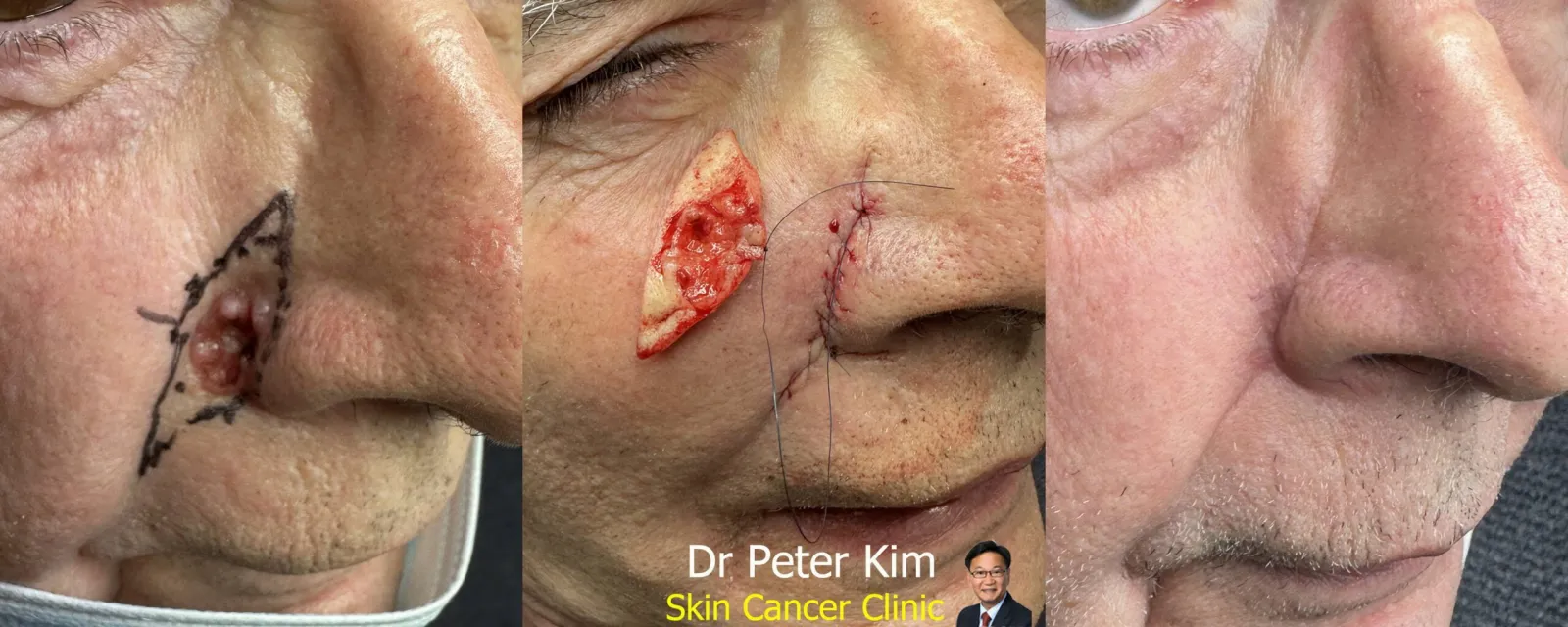
Basal cell carcinoma beside the nose before simple elliptical excision, the sutured wound and the healed result
BCC from the side of the nose was removed using simple excision and sutured. The cosmetic result was satisfactory at 3 months follow-up.
Watch

S-plasty – Clinical application in dermatologic surgery

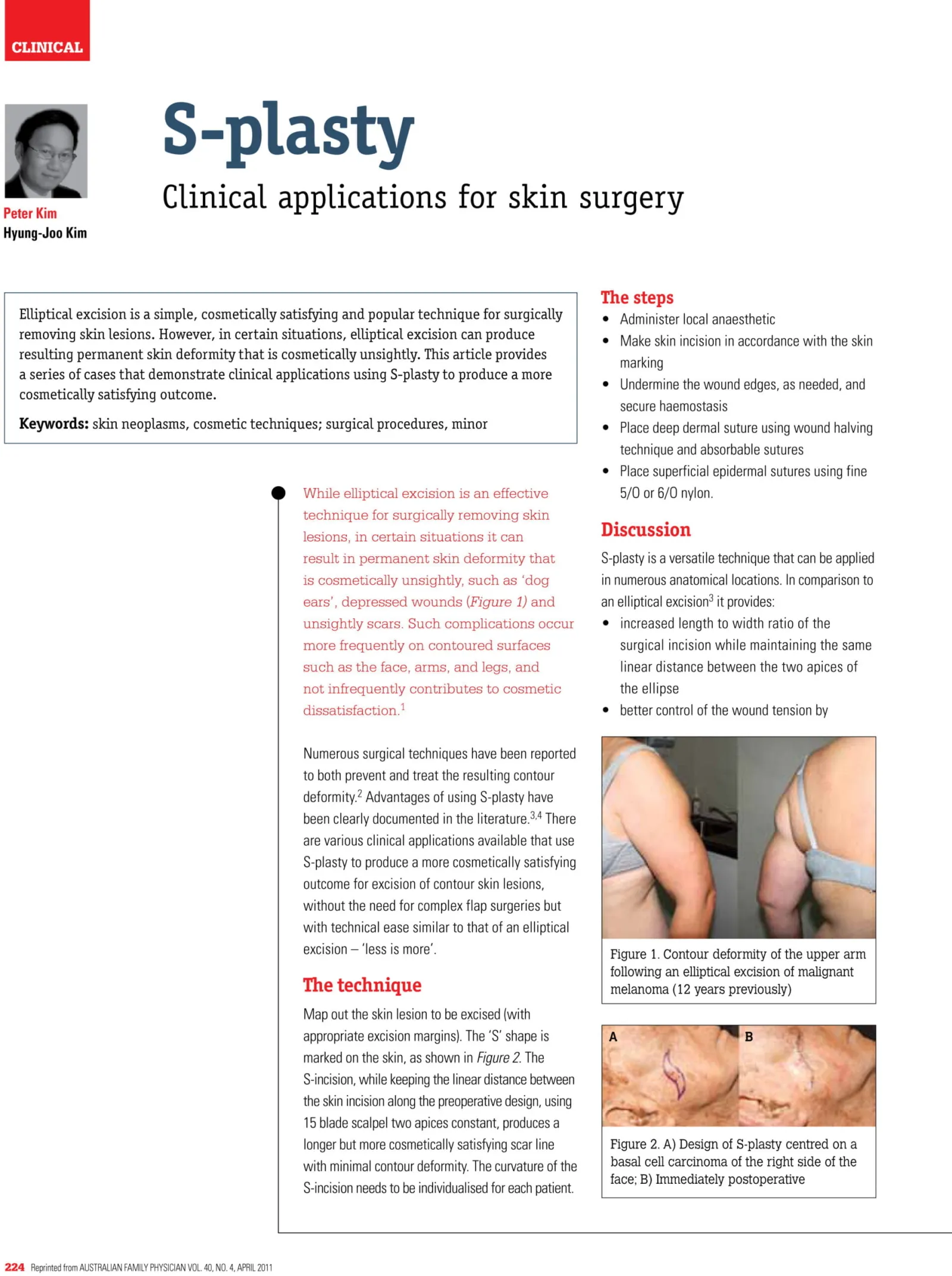
S-plasty is a type of procedure that differs from a simple (elliptical) excision. Instead of removing skin in an elliptical shape, skin in an S shape is cut out. The purpose of this procedure is to effectively manage the tension on the wound’s surface. Having better control over skin tension is especially crucial when dealing with contoured areas. Additionally, it can result in a more aesthetically pleasing outcome.

Dr Kim’s S-plasty was published in 2009 both in the journal Australian Family Physician and in the textbook. Read the S-plasty article in Australian Family Physician (RACGP)

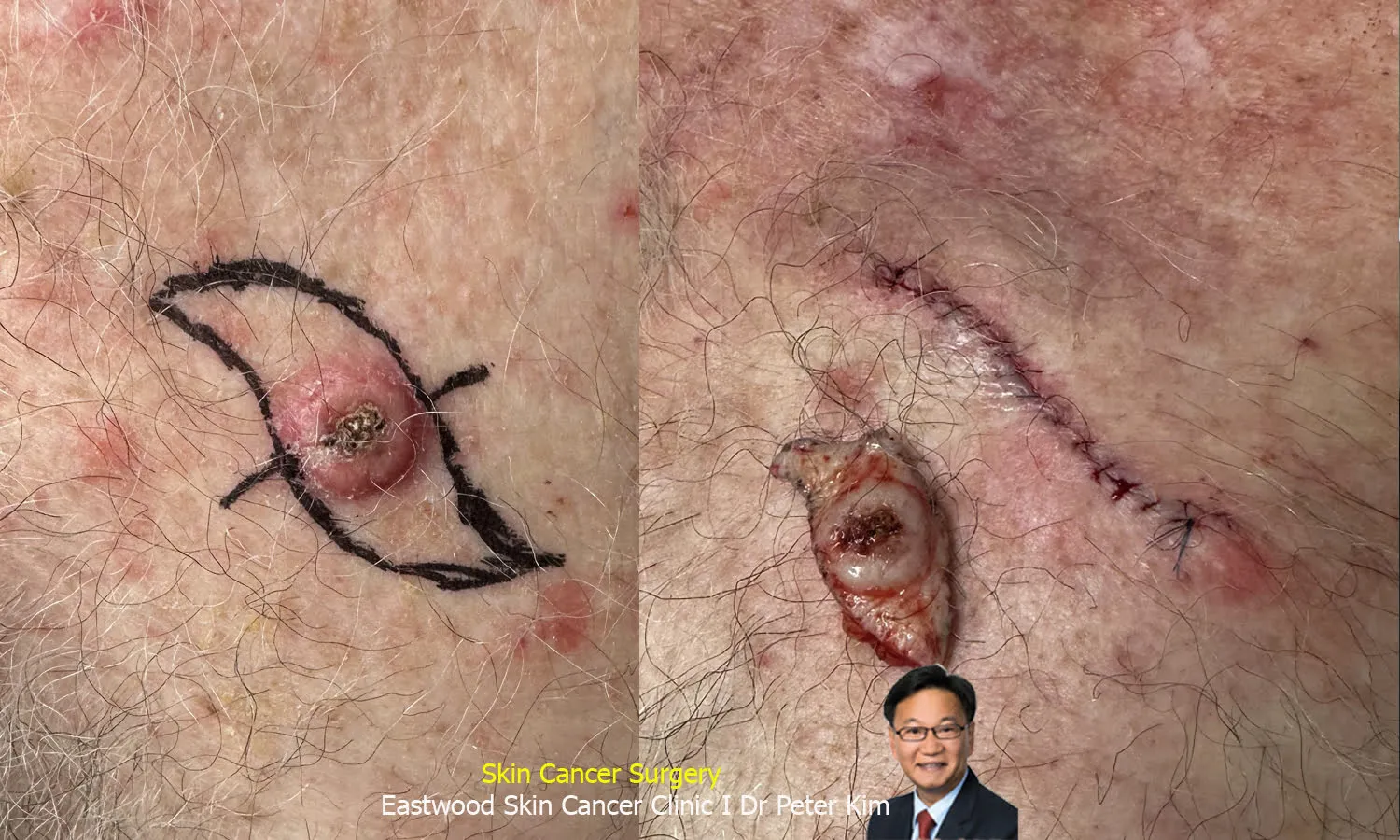
S-plasty for squamous cell carcinoma on the chest: S-shaped excision design and sutured wound beside the excised lesion
S-plasty for squamous cell carcinoma of the chest.
Page 1 of Dr Peter Kim’s article S-plasty: clinical applications for skin surgery, Australian Family Physician
S-plasty – clinical applications for skin surgery (page 1)
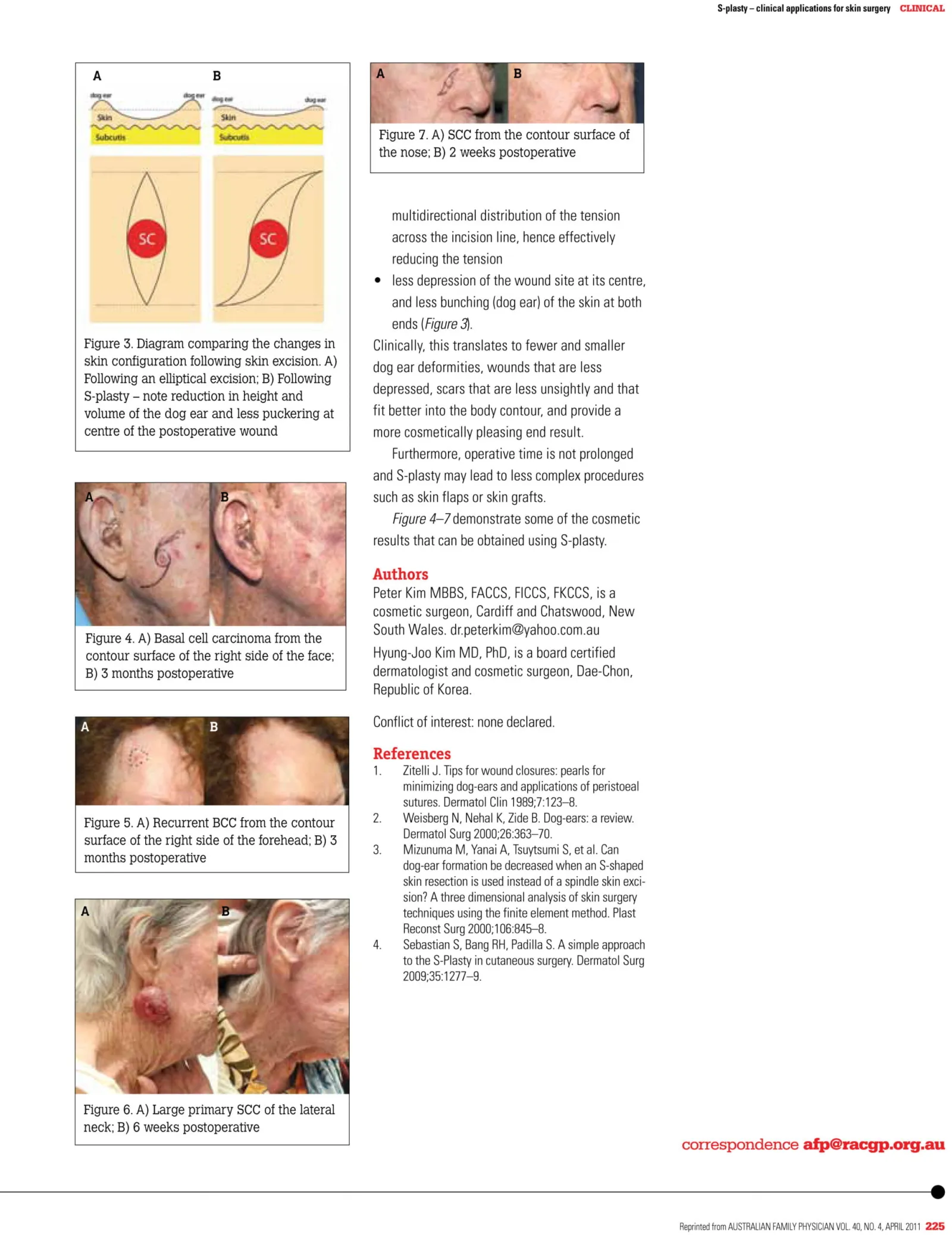
Page 2 of the S-plasty article with diagrams and before-and-after photos of S-plasty skin cancer excisions
S-plasty – clinical applications for skin surgery (page 2)

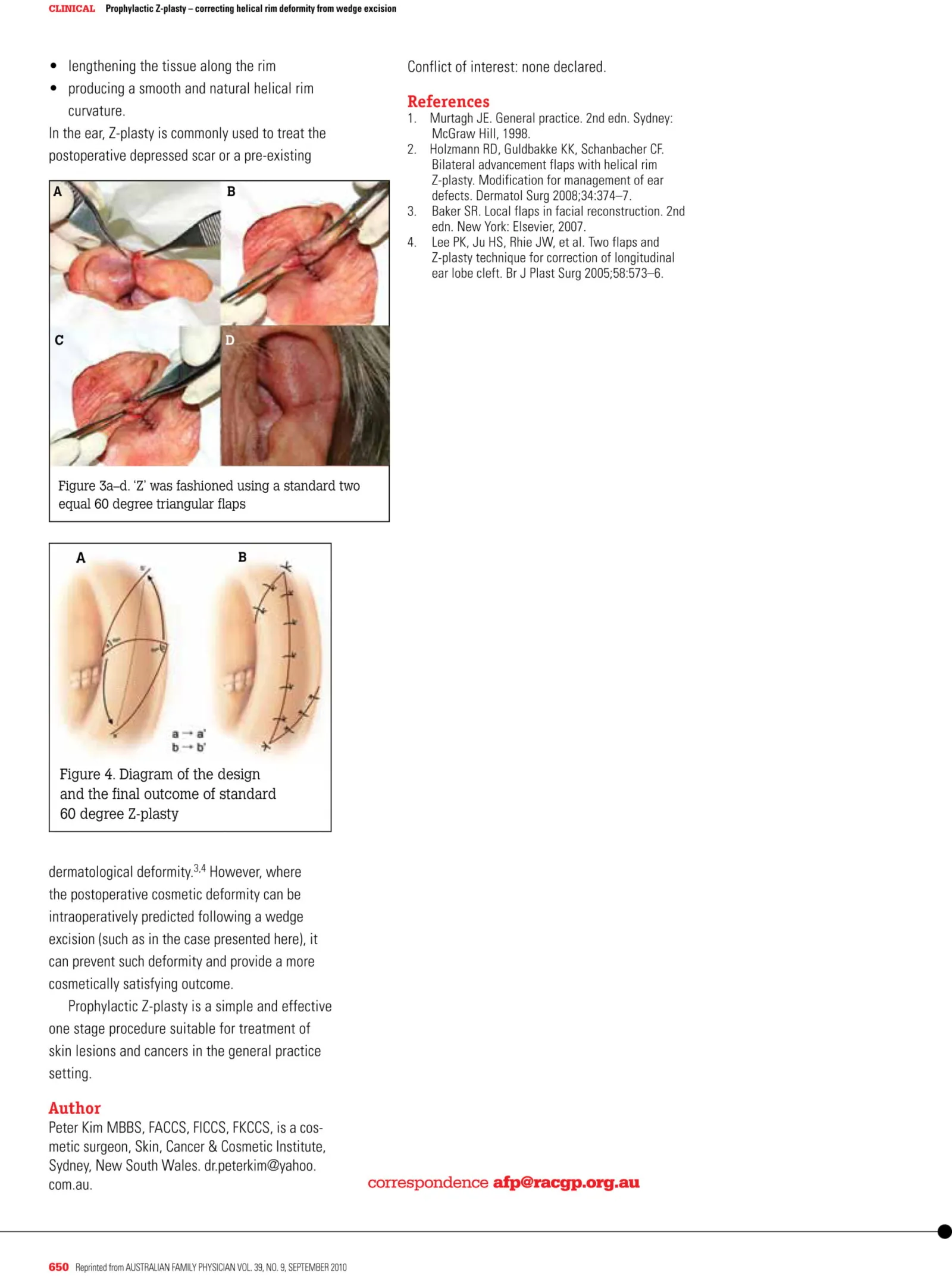
Prophylactic Z-plasty – Correcting helical rim deformity from wedge excision

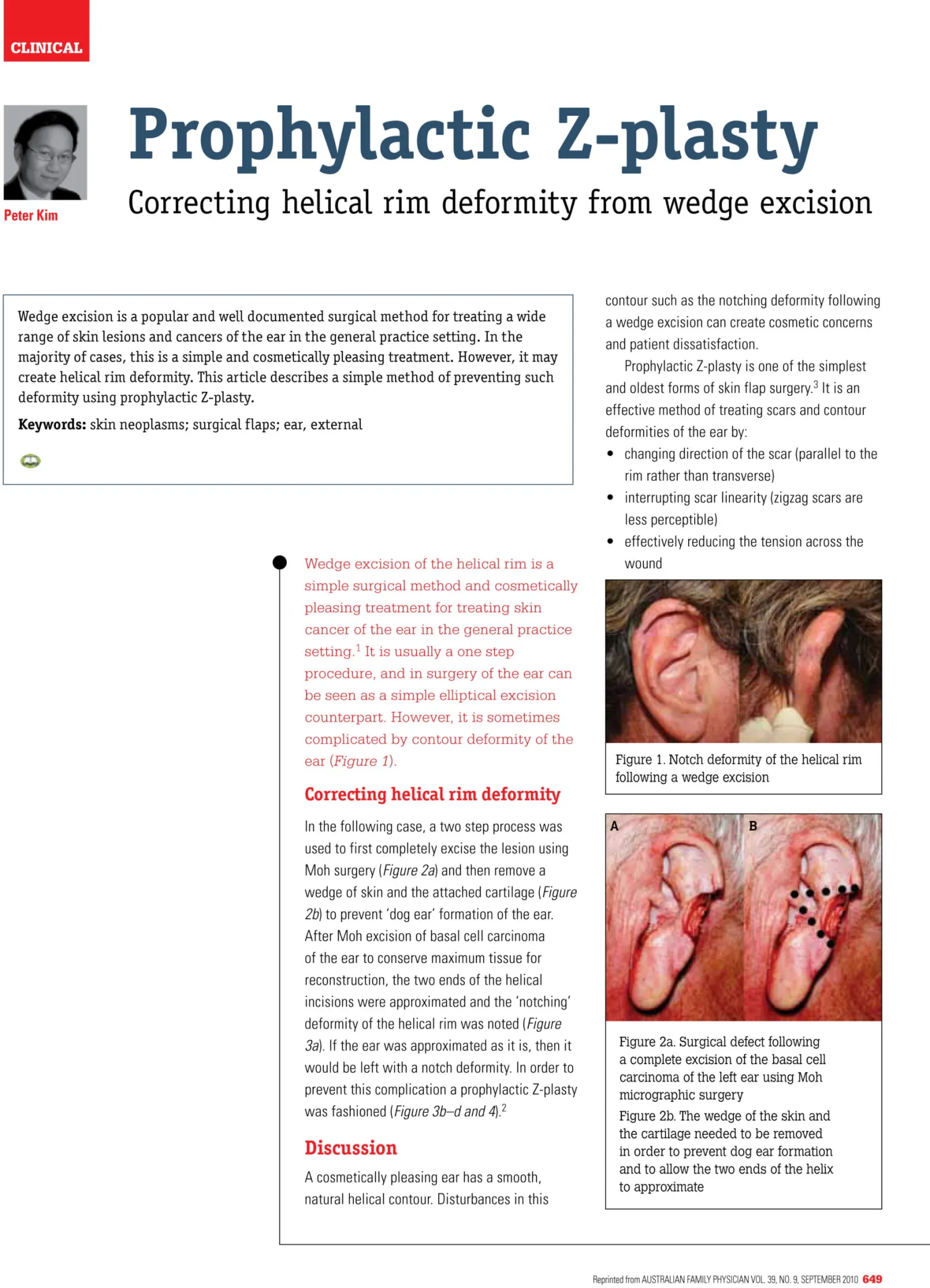
Z-plasty is a skin flap surgery commonly used in dermatologic surgery. Dr Kim applied this surgical technique to prevent a helical rim deformity after a wedge excision of a skin lesion in the ear.

Dr Kim’s Z-plasty was published in 2009 both in the journal Australian Family Physician and in the textbook. Read the prophylactic Z-plasty article in Australian Family Physician (RACGP)

Page 1 of Dr Peter Kim’s article Prophylactic Z-plasty: correcting helical rim deformity from wedge excision
Prophylactic Z-plasty – correcting helical rim deformity from wedge excision (page 1)
Page 2 of the prophylactic Z-plasty article with ear surgery photos and a diagram of a 60-degree Z-plasty
Prophylactic Z-plasty – correcting helical rim deformity from wedge excision (page 2)

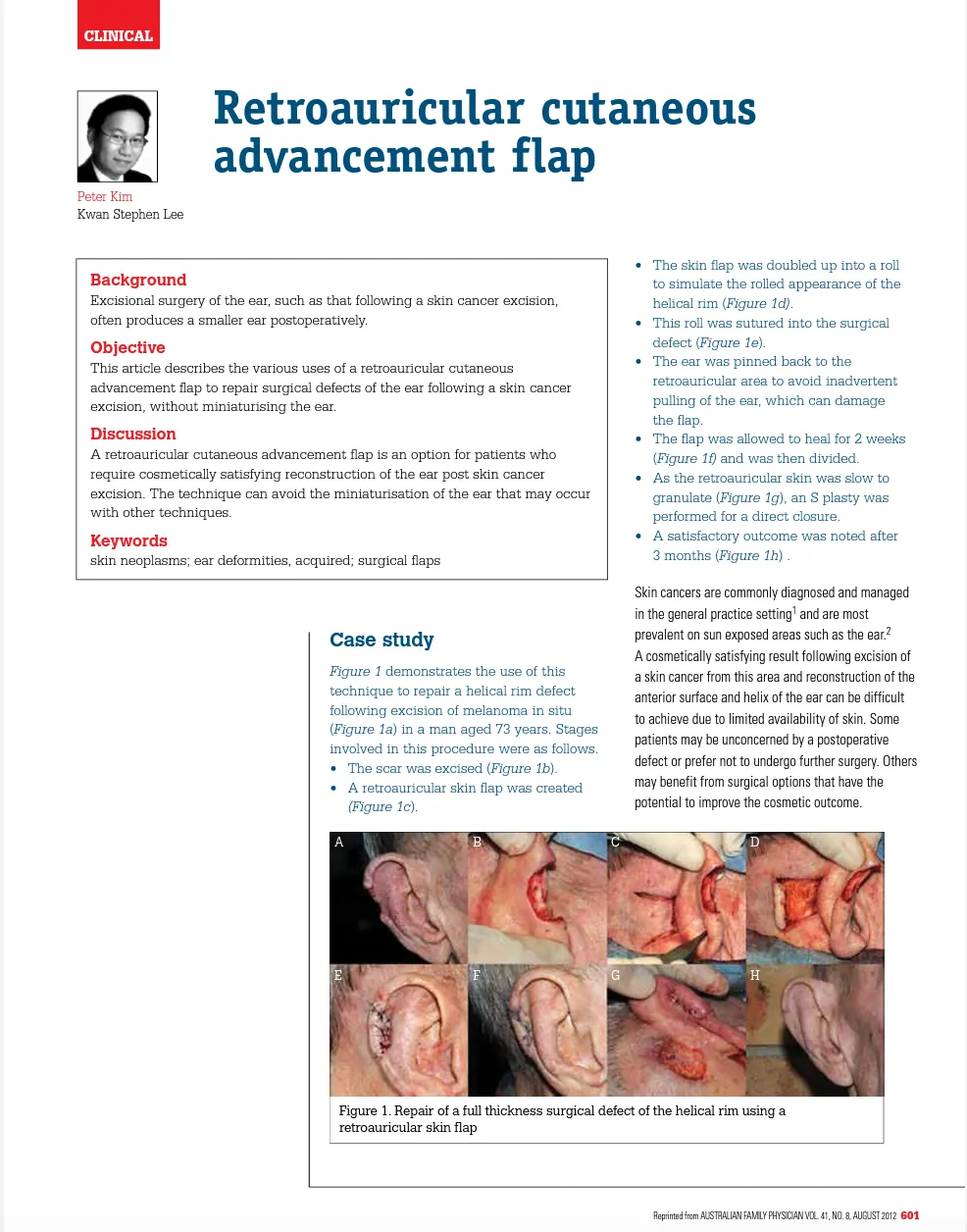
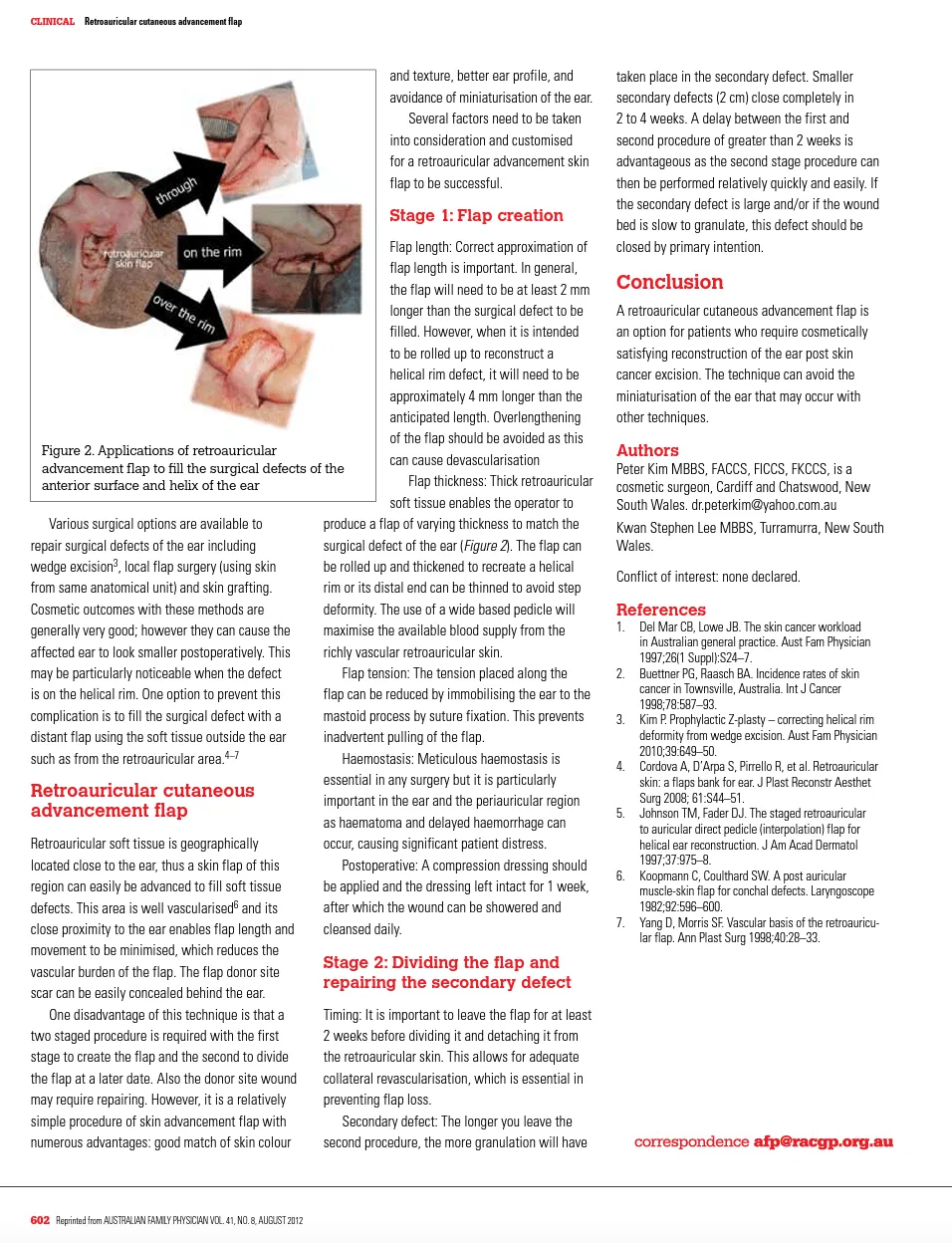
Retroauricular cutaneous advancement flap

Abstract

Background: Excisional surgery of the ear, such as that following a skin cancer excision, often produces a smaller ear postoperatively.

Objective: This article describes the various uses of a retroauricular cutaneous advancement flap to repair surgical defects of the ear following a skin cancer excision, without miniaturising the ear.

Discussion: A retroauricular cutaneous advancement flap is an option for patients who require cosmetically satisfying reconstruction of the ear post skin cancer excision. The technique can avoid the miniaturisation of the ear that may occur with other techniques.

Dr Kim’s retroauricular flap was published in 2010 both in the journal Australian Family Physician and in the textbook. View the retroauricular cutaneous advancement flap article on PubMed

Page 1 of Dr Peter Kim’s article Retroauricular cutaneous advancement flap, with abstract and ear repair photos
Retroauricular cutaneous advancement flap (page 1)
Page 2 of the retroauricular cutaneous advancement flap article describing flap creation and secondary defect repair
Retroauricular cutaneous advancement flap (page 2)

Book a consultation

To arrange a skin cancer assessment with Dr Peter Kim, call (02) 9411 4880, SMS 0433 284 880 or email peter@peterkim.com.au.

Dr Kim consults at our Chatswood (4/9 Railway Street) and Cabramatta (227 Railway Parade) clinics, Wednesday to Saturday, 9:00 am – 5:00 pm. See clinic locations and contact details.

After surgery, please follow our wound care instructions after skin surgery.

Call us on 9411 4880

Chatswood & Cabramatta

Call now
Email us