
Laser Mole Removal
Mole Assessment – Clinical Consultation
The average cost for a single laser mole removal is around $500. Discounts are available for multiple moles treated during the same session: $750–$1000. Most patients have the treatment performed on the same day as the consultation.
Consultation fee: $105 (Medicare rebate: $45). Follow-ups are usually bulk-billed.
For a consultation:
📍 Chatswood & Cabramatta | 🕒 Wed–Sat, 9:00 am – 5:00 pm
📞 02 9411 4880 or 0433 284 880
What is a mole?
Mole is a lay term to describe numerous different types of skin lumps. There are different types of moles, and that is the reason why they present in all different shapes, sizes, and colours. The common theme is that they are not cancer. They are benign and can be removed for cosmetic reasons. That is why laser mole removal does not have any Medicare rebate.
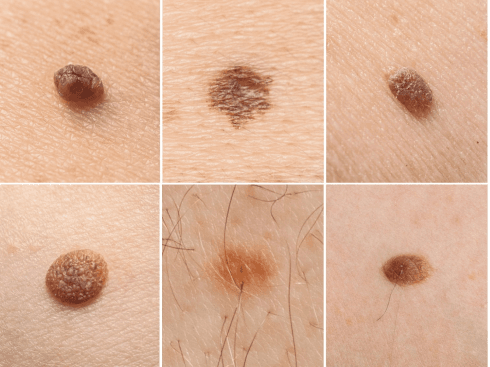
Where do they present?
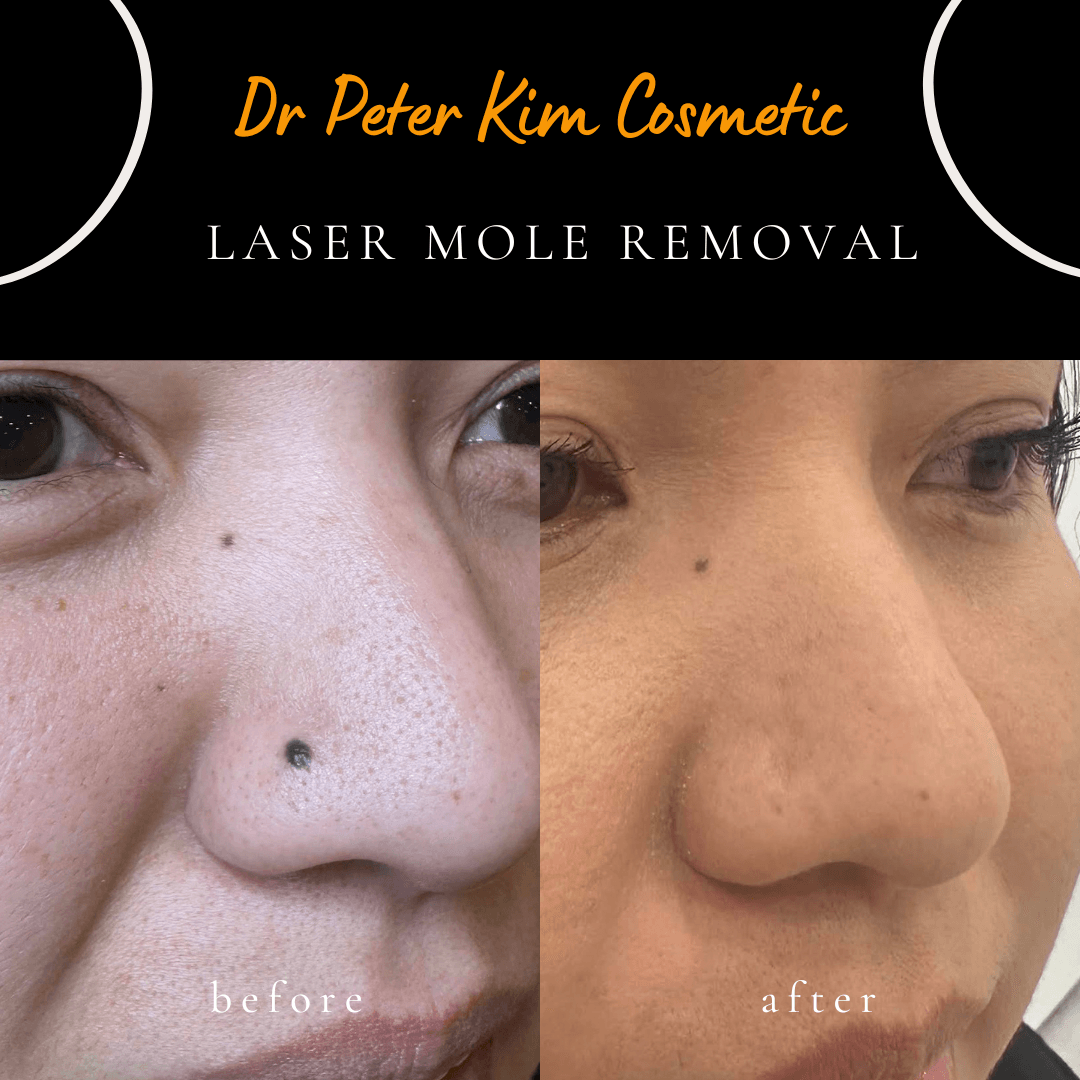
They can present any part of the face and body. Moles on the face are the most common ones we treat like the photo below.

Some present with one or two moles, others present with many more moles to treat. The cost varies depending on the size and number of moles to be treated. For a large number of moles, such as the case below, we charge $1000 per session, and this patient needed 2 sessions (2025).

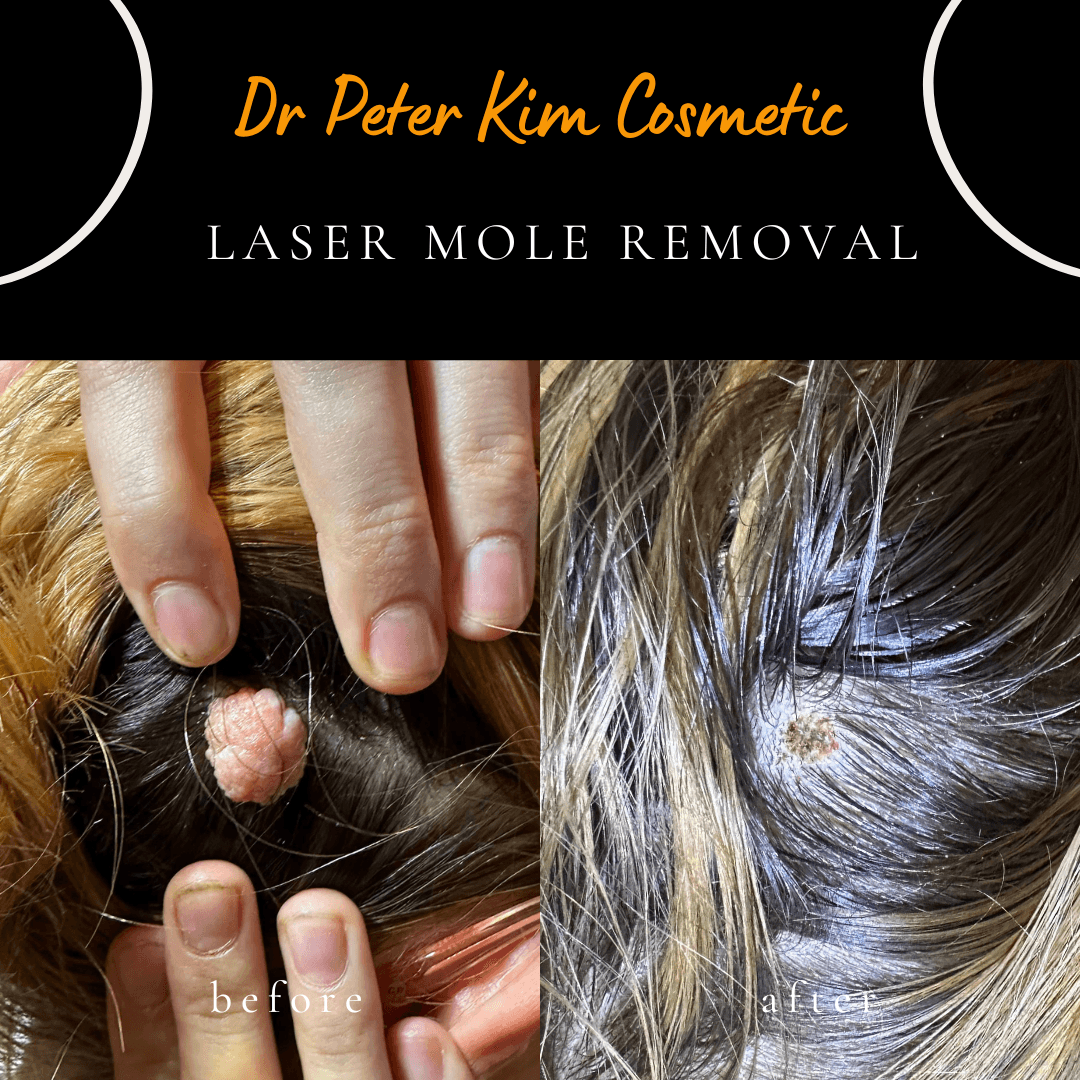
Different types of moles require a different laser or technique to successfully remove them. If you have a raised mole, it is generally best treated with a CO2 laser. If the mole also has pigment, it may require a pigment laser. If a mole has blood vessels, it may require a vascular laser. Some people have a mole that is raised, pigmented, and vascular. Those patients require all three lasers.
Here is an example of a pigmented raised mole treated with CO2 and pigment laser.
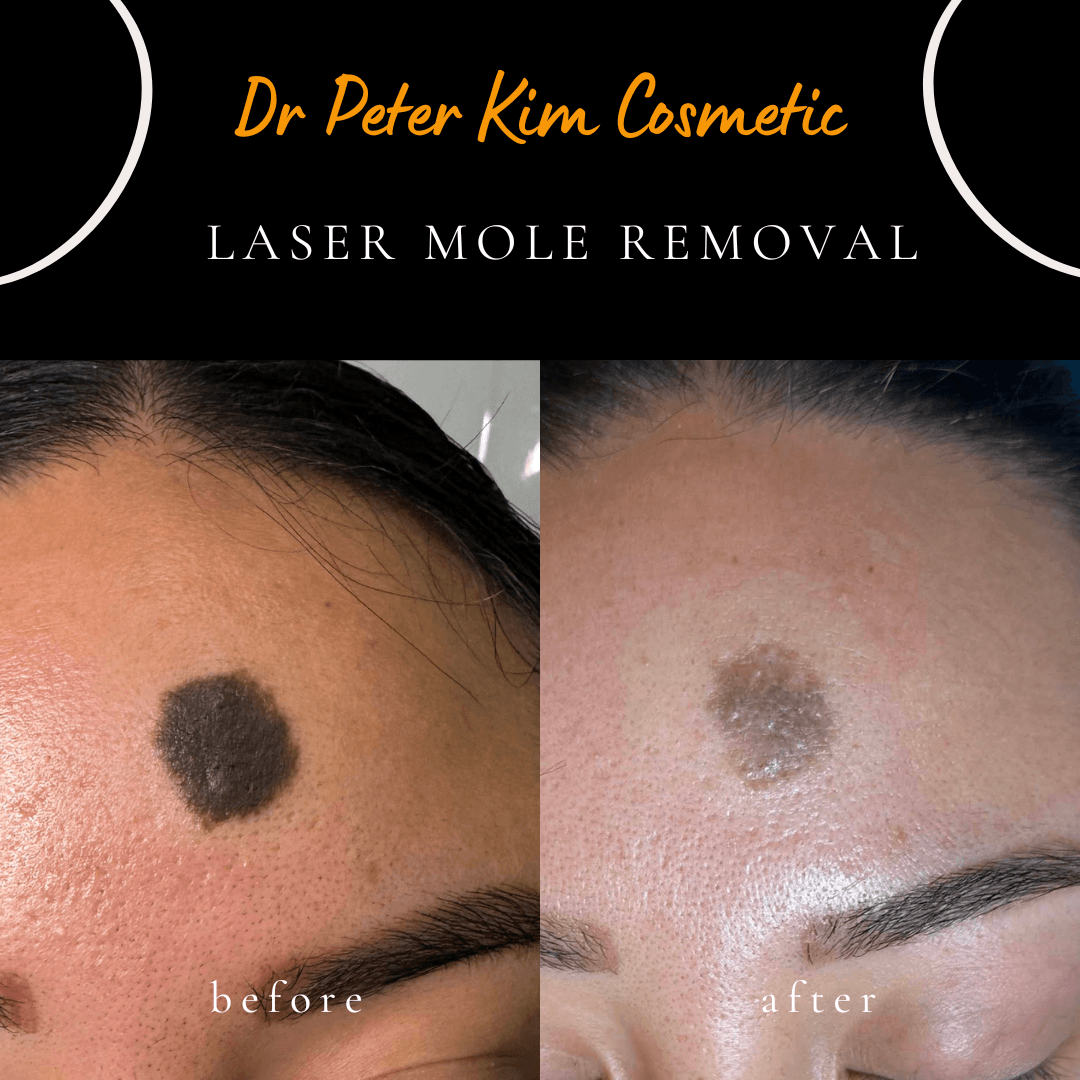
Here is an example of pigemnted flat mole treated wiith pigment laser only.
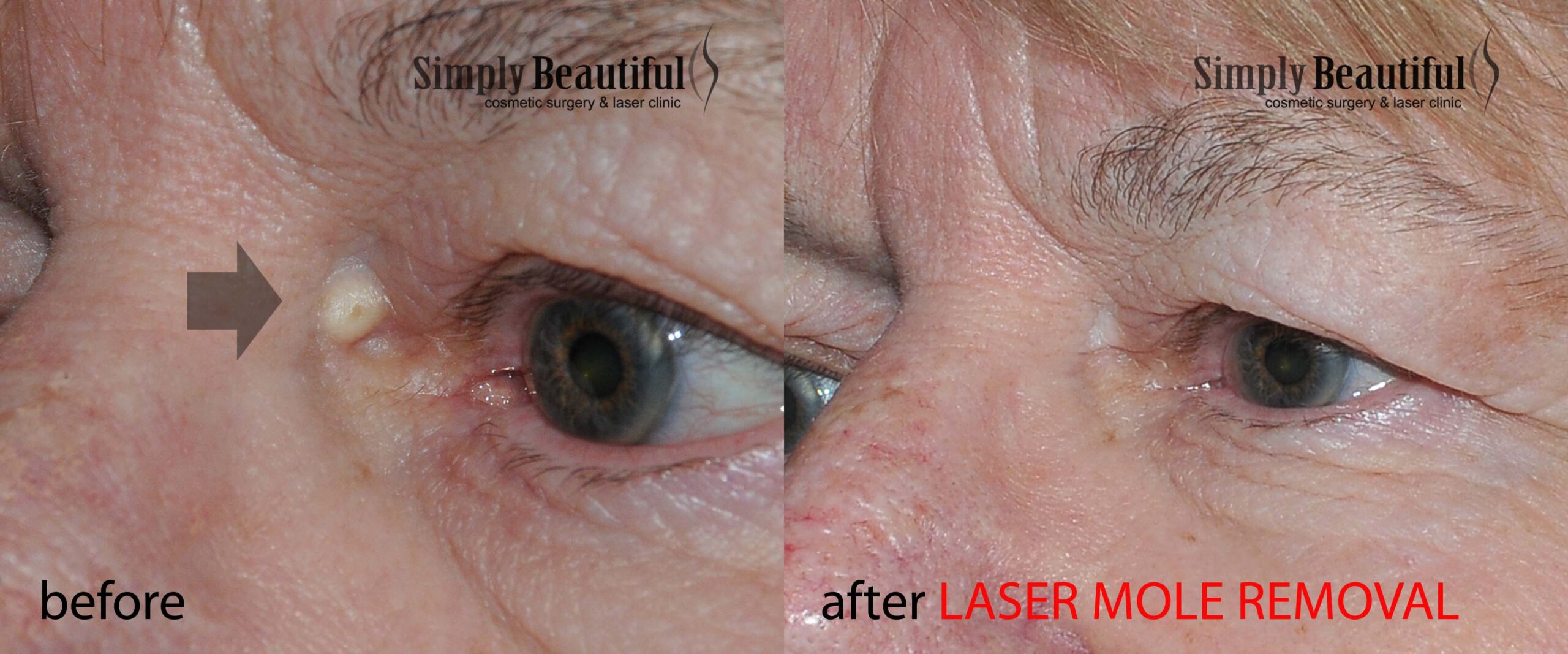
Here is an exmaple of vasular mole treated with vascular laser.

Do they come back?
Once the treatment is finished, the chance of moles coming back is about 5%. If they return within 3 months of treatment, we don’t charge again. If the moles recur after many months or years, we do charge.
Does it hurt?
Smaller moles need no numbing cream or injection.
Medium-sized moles or multiple moles may benefit from numbing cream or injection. This is on a case-by-case basis.
Laser time is brief in most cases, and it is tolerable.
The following are moles we treated on regular basis and over the past 20 years.
📍 Chatswood & Cabramatta | 🕒 Wed–Sat, 9:00 am – 5:00 pm
📞 02 9411 4880 or 0433 284 880

📍 Chatswood & Cabramatta | 🕒 Wed–Sat, 9:00 am – 5:00 pm
📞 02 9411 4880 or 0433 284 880

Laser mole removal on the lower eyelid margin. These moles are removed with corneal cap and local anaesthesia.
📍 Chatswood & Cabramatta | 🕒 Wed–Sat 9 AM – 5 PM
📞 Call 02 9411 4880 or 0433 284 880 to book

📍 Chatswood & Cabramatta | 🕒 Wed–Sat 9 AM – 5 PM
📞 Call 02 9411 4880 or 0433 284 880 to book

📞 Call 02 9411 4880 or 0433 284 880 to book your consultation.
📍 Chatswood & Cabramatta | 🕒 Wed–Sat 9 AM – 5 PM


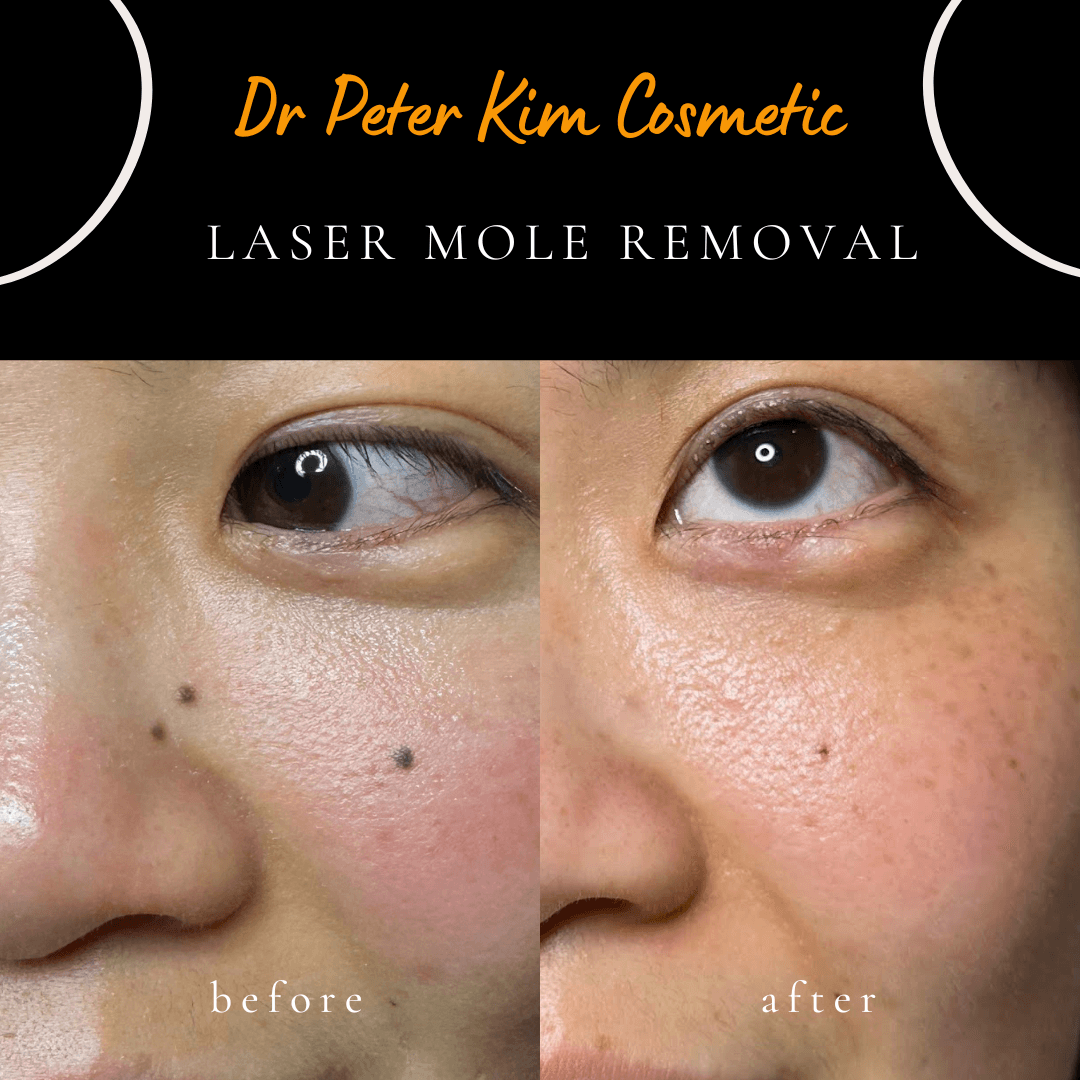
Laser mole removal of two moles in the nose.
📞 Call 02 9411 4880 or 0433 284 880 to book your consultation.
📍 Chatswood & Cabramatta, Sydney
🕒 Wed–Sat | 9:00 AM – 5:00 PM

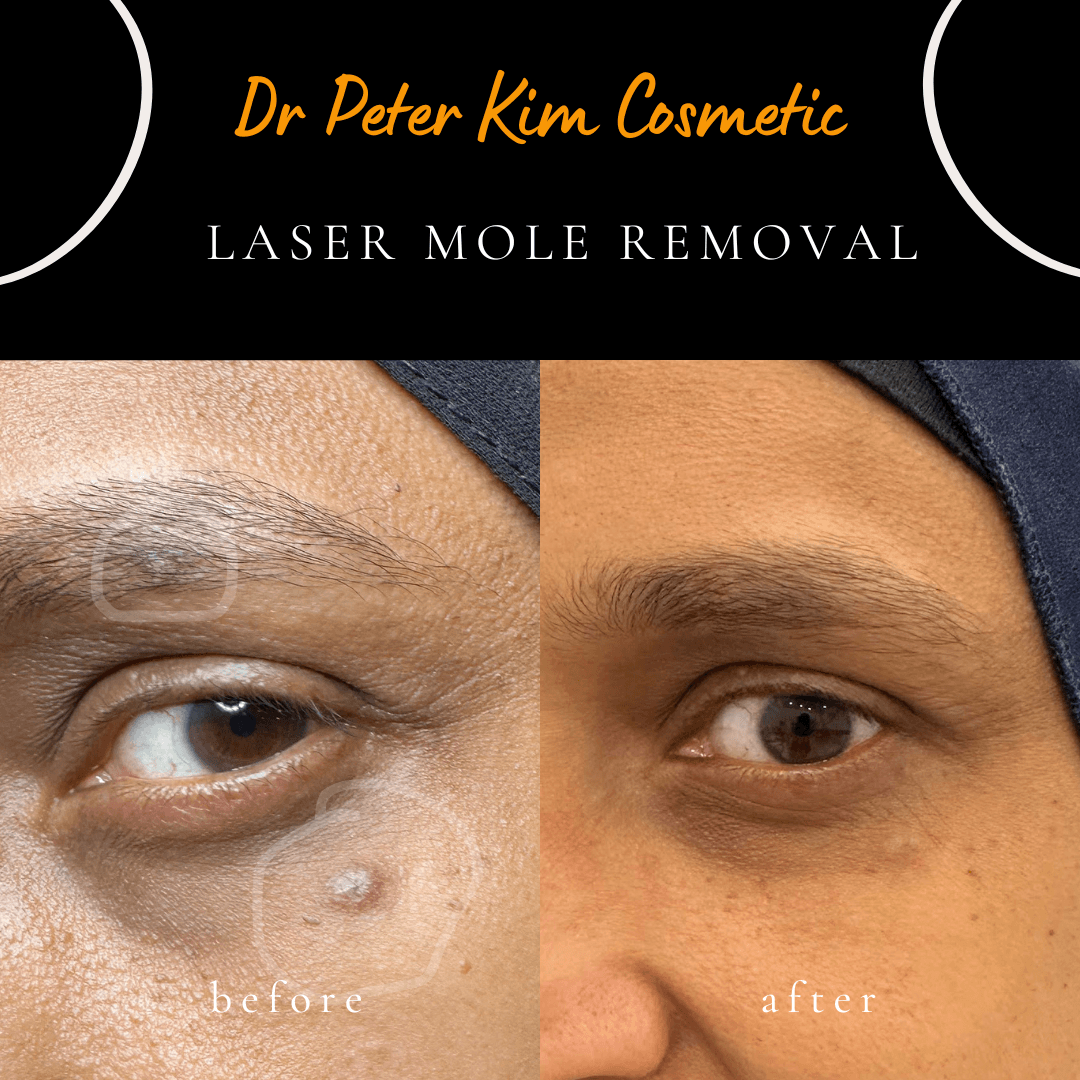
Laser mole removal of a mole in the lower eyelid.📞 Call 02 9411 4880 or 0433 284 880 to book your consultation.
📍 Chatswood & Cabramatta, Sydney
🕒 Wed–Sat | 9:00 AM – 5:00 PM

📞 Call 02 9411 4880 or 0433 284 880 to book your consultation.
📍 Chatswood & Cabramatta, Sydney
🕒 Wed–Sat | 9:00 AM – 5:00 PM

📞 Call 02 9411 4880 or 0433 284 880 to book your consultation.
📍 Chatswood & Cabramatta, Sydney
🕒 Wed–Sat | 9:00 AM – 5:00 PM
📞 Call 02 9411 4880 or 0433 284 880 to book your consultation.
📍 Chatswood & Cabramatta, Sydney
🕒 Wed–Sat | 9:00 AM – 5:00 PM

📞 Call 02 9411 4880 or 0433 284 880 to book your consultation.
📍 Chatswood & Cabramatta, Sydney
🕒 Wed–Sat | 9:00 AM – 5:00 PM

Laser mole removal of a mole (fibrous papule) on the nose.
📞 Call 02 9411 4880 or 0433 284 880 to book your consultation.
📍 Clinics in Chatswood and Cabramatta, Sydney
🕒 Open Wed–Sat | 9:00 AM – 5:00 PM (appointments only)

Laser mole rmeoval of the vascular lump in the lower lip.
📞 Call 02 9411 4880 or 0433 284 880 to book a consultation.
📍 Clinics in Chatswood and Cabramatta, Sydney
🕒 Open Wed–Sat | 9:00 AM – 5:00 PM (appointments only)

📞 Call 02 9411 4880 or 0433 284 880 to book your consultation.
📍 Clinics in Chatswood and Cabramatta, Sydney
🕒 Open Wed–Sat | 9:00 AM – 5:00 PM (by appointment only)
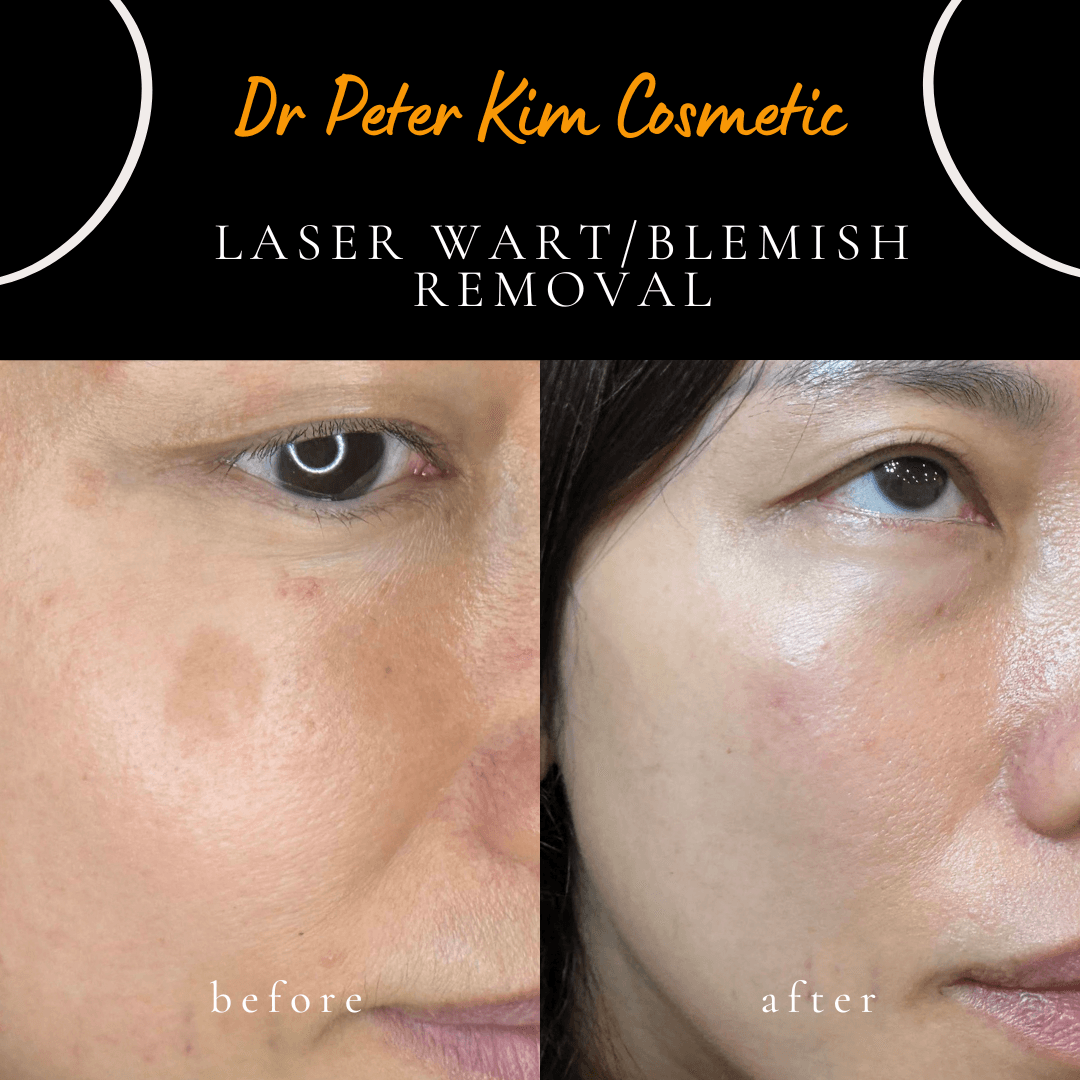
Mulitple warts and moles removed in the face.📞 For consultation or enquiries, contact us at 02 9411 4880 or 0433 284 880
📍 Chatswood & Cabramatta, Sydney
🕒 Opening Hours: 9:00 AM – 5:00 PM (Wed–Sat)


📞 For consultation or enquiries, contact us at 02 9411 4880 or 0433 284 880
📍 Chatswood & Cabramatta, Sydney
🕒 Opening Hours: 9:00 AM – 5:00 PM (Wed–Sat)

📞 For consultation or enquiries, contact us at 02 9411 4880 or 0433 284 880
📍 Chatswood & Cabramatta, Sydney
🕒 Opening Hours: 9:00 AM – 5:00 PM (Wed–Sat)

Mole removed from the chin with laser. 📞 For consultation or enquiries, contact us at 02 9411 4880 or 0433 284 880
📍 Chatswood & Cabramatta, Sydney
🕒 Opening Hours: 9:00 AM – 5:00 PM (Wed–Sat)

📍 Chatswood | Cabramatta | Eastwood
📞 Call 02 9411 4880 to book your consultation!

📞 For consultation or enquiries, contact us at 02 9411 4880 or 0433 284 880
📍 Chatswood & Cabramatta, Sydney
🕒 Opening Hours: 9:00 AM – 5:00 PM (Wed–Sat)

📍 Chatswood & Cabramatta, Sydney
🕒 Opening Hours: 9:00 AM – 5:00 PM (Wed–Sat)


📍 Chatswood & Cabramatta, Sydney
🕒 Opening Hours: 9:00 AM – 5:00 PM (Wed–Sat)

📍 Chatswood & Cabramatta, Sydney
🕒 Opening Hours: 9:00 AM – 5:00 PM (Wed–Sat)


📍 Chatswood & Cabramatta, Sydney
🕒 Opening Hours: 9:00 AM – 5:00 PM (Wed–Sat)

📍 Chatswood & Cabramatta, Sydney
🕒 Opening Hours: 9:00 AM – 5:00 PM (Wed–Sat)
📞 To Arrange a Mole Assessment
Please contact our clinic:
📞 02 9411 4880 or 0433 284 880 to book a consultation.
Laser Mole Removal FAQ
What is laser mole removal? Laser mole removal is a non-surgical cosmetic procedure that uses focused light energy (such as CO₂ or pigment-specific lasers) to break down the pigment cells in a mole. The body then naturally absorbs or sheds the treated tissue over time. It is primarily used for benign (non-cancerous), flat or slightly raised moles, especially on the face, neck, or other visible areas where minimal scarring is desired.
Is laser mole removal safe? Yes, Dr Peter Kim has been providing laser mole removal for over 20 years in his Sydney practices. It is generally considered safe. Proper assessment ensures the mole is benign beforehand. Temporary side effects like redness, swelling, or scabbing are common and usually resolve within days to weeks. Serious complications are rare but can include infection, pigmentation changes, or scarring if aftercare is not followed.
Who is a good candidate for laser mole removal? Ideal candidates have benign, non-suspicious moles that are small, superficial, or pigmented. It works well for people concerned about cosmetic appearance and those with lighter skin tones and darker moles. It is not suitable for suspicious, changing, or potentially cancerous moles, as no tissue sample is available for biopsy. A dermatologist will assess your moles (often with a dermatoscope) during consultation.
Does laser mole removal hurt? Most patients experience minimal discomfort. A topical numbing cream or local anesthetic injection is typically applied, making the procedure tolerable or painless. You may feel a mild warming or snapping sensation during treatment.
How long does the procedure take? A single session usually takes 15–30 minutes, including consultation and aftercare instructions. Multiple moles can often be treated in one appointment.
How many sessions will I need? It varies by mole size, depth, type and number of moles. Small, superficial moles may flatten or disappear after 1 session. Larger or deeper moles often require 2–3 sessions spaced several weeks apart for the best cosmetic result. Some deeper moles with pigmations may need upto 10 sessions.
Will the mole come back? Laser removal can be permanent for many patients, but there is a small risk of recurrence if some mole cells remain deeper in the skin (5%). Unlike surgical excision, the entire mole structure is not physically removed, so complete elimination is not always guaranteed.
What are the possible side effects and risks?
- Common temporary effects include redness, swelling, scabbing, itching, or mild discomfort.
- Less common risks include temporary or permanent changes in skin pigmentation (lighter or darker), infection, or scarring.
- Proper sun protection during healing greatly reduces pigmentation risks.
What is the recovery and aftercare like?
Downtime is minimal. You may have redness or a small scab for a few days to two weeks. Some lasered spots may remain red for several months.
Full healing (new skin forming) typically takes 1–2 weeks, with redness fading over additional weeks. The final cosmetic result continues to improve for up to a few months.
Key aftercare tips:
- Keep the area clean and dry for the first 24–72 hours.
- Apply any prescribed ointment and avoid picking at scabs.
- Strictly protect the area from sun exposure (use SPF 50+ and cover it) for several weeks to months.
- Avoid strenuous exercise, sweating, or swimming until healed.
- Follow your provider’s specific instructions for best healing.
Will there be a scar?
Laser removal is chosen because it may minimize scarring better than traditional surgery. Most patients experience little to no visible scarring, especially with small moles and good aftercare. However, some redness, texture changes, or a faint mark may occur temporarily or (rarely) permanently. Even if a small scar forms, it generally looks better than the treated mole.
How much does laser mole removal cost?
Costs vary widely depending on location, provider experience, mole size and number, and sessions. More sessions or larger areas increase the total. Consultations have a Medicare rebate, but laser mole removal does not and is charged extra, as it is considered cosmetic and not covered by insurance.
What’s the difference between laser and surgical mole removal?
- Laser: No cutting, minimal downtime, lower scarring risk, but no tissue for biopsy and possible higher recurrence risk. Best for cosmetic, benign moles.
- Surgical excision/shave: Removes the entire mole for pathology testing, lower recurrence, but may involve stitches and a linear scar. Preferred for suspicious moles. Your doctor will recommend the best option based on the mole’s characteristics.
Important disclaimer: This information is for educational purposes only and is not a substitute for professional medical advice. Always consult a qualified dermatologist or skin specialist for a personalized assessment. Suspicious moles should never be removed with laser without proper evaluation, as early detection of skin cancer is critical. Results vary by individual.
FAQ Laser Mole Removal
FAQ: Mole Assessment – Clinical Consultation
Q: What is a mole assessment?
A mole assessment is a clinical consultation conducted by a qualified medical practitioner. It involves examining skin lesions to understand their characteristics, reviewing relevant medical history, and discussing clinical considerations based on individual presentation.
Q: What happens during a mole assessment?
During the consultation, Dr Peter Kim will review your medical history, examine the mole or skin lesion, and discuss any concerns you may have. The assessment focuses on identifying clinical features that may be relevant to ongoing care or further investigation.
Q: Are all moles suitable for procedural removal?
Not all moles are suitable for procedural management. A clinical assessment is essential to determine whether a mole requires monitoring, further investigation, referral, or discussion of management options. Any decision is based on individual clinical factors.
Q: Will procedures be discussed during the consultation?
If appropriate, potential management options may be discussed during a clinical consultation. Any discussion of procedures or interventions occurs within a professional medical setting and follows applicable regulatory and professional guidelines.
Q: Is a mole assessment important for skin health?
Clinical assessment of skin lesions is an important part of skin health evaluation. Some moles may require monitoring over time, while others may warrant further investigation depending on their features and individual risk factors.
Q: Are risks discussed during the consultation?
If relevant, potential risks associated with medical procedures or interventions are explained during consultation to support informed decision-making. The discussion is tailored to individual clinical circumstances.
Q: How many consultations are required?
The number of consultations required varies depending on individual clinical findings. This is determined on a case-by-case basis following assessment.
Q: How are fees handled?
Consultation fees and any potential costs associated with further investigations or care options are explained during the consultation and are based on individual clinical considerations.
Q: Who conducts the consultation?
All mole assessments are conducted by Dr Peter Kim, a registered medical practitioner.
Q: How do I arrange a mole assessment?
To arrange a consultation or discuss your concerns, please contact the clinic to book an appointment.
📞 Call 02 9411 4880
Error: Contact form not found.