Over the past 20 years, our clinic has assessed and managed hundreds of cases of xanthelasma. Where clinically appropriate, treatment may be performed using laser technology. The fee for treatment is $750 per lesion. Procedures are typically performed under local anaesthesia and, in suitable cases, may be undertaken on the same day as the consultation.
Xanthelasma are cholesterol deposits that can develop on or near the eyelids. Although they are generally not medically harmful, some individuals seek assessment due to cosmetic concerns.
A consultation involves a clinical assessment of the lesions, discussion of available management options, and consideration of potential risks and limitations. Suitability for treatment is determined on an individual basis, and outcomes may vary.
To arrange a consultation or discuss your concerns, please contact our clinic.
Fees
Consultation fee: $105, with an applicable Medicare rebate (item 23) where eligible. A $50 deposit is required to secure your appointment. This amount will be credited toward your consultation fee on the day.
Typical gap fee for removal: The average gap fee for a xanthelasma laser treatment is around $750 with Medicare.
Appointments
To arrange a consultation, please contact the clinic:
The following are real cases of laser xanthelasma treatments performed under local anaesthesia by Dr Peter Kim. These are for educational purposes only and are not promotional. Individual circumstances and outcomes may vary. Due to TGA regulations, before and after photos cannot be provided.
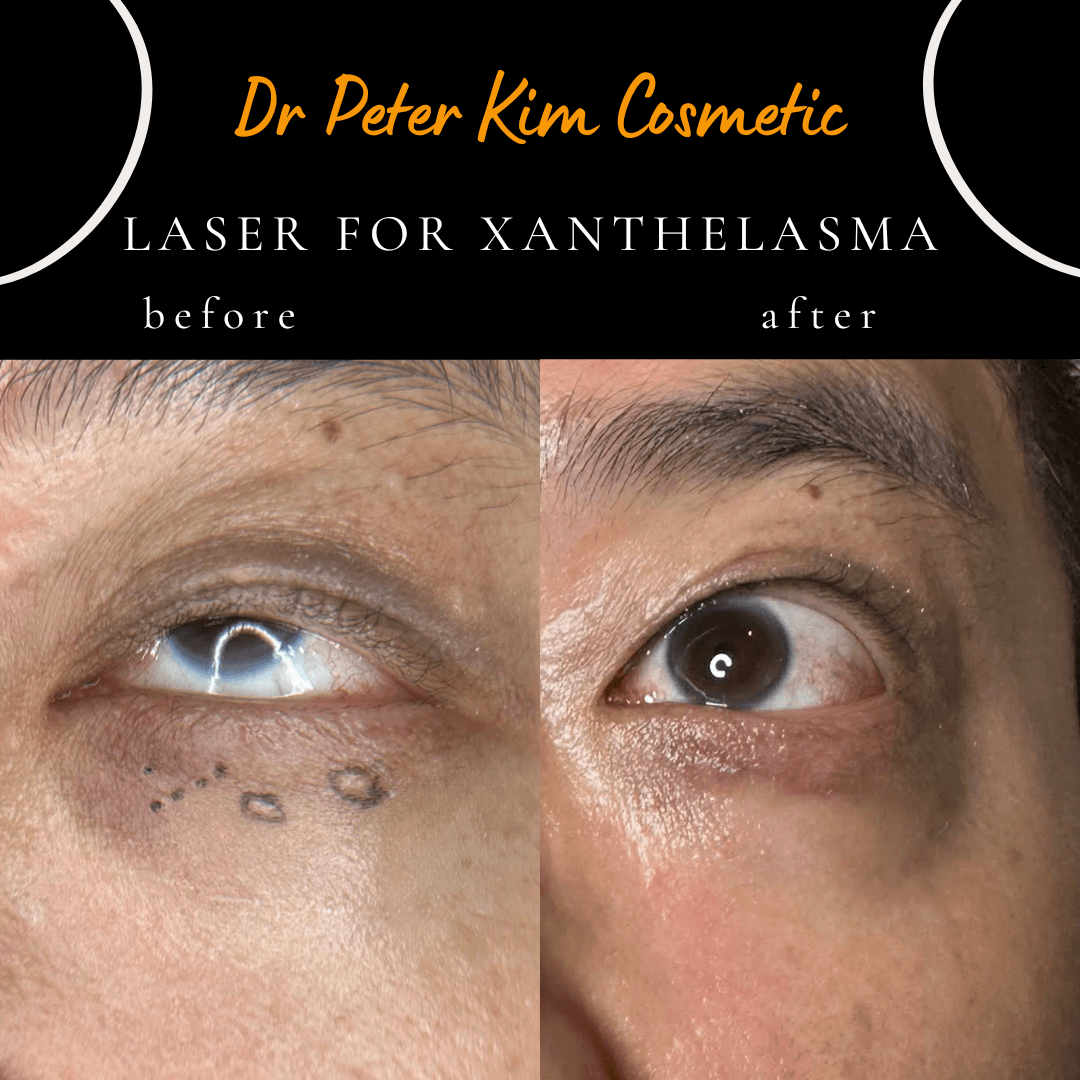
This patient had xanthelasma of lower eyelids treated with laser. The photos were taken 3 weeks after the treatment when he came back to have the upper eyelid xanthelasma also treated. Clinic locations: Chatswood & Cabramatta, NSW Opening hours: Wednesday – Saturday | 9:00 AM – 5:00 PM Phone: (02) 9411 4880 • 0433 284 880Laser xanthelasma removal can achieve precise cosmetic improvement with minimal downtime. Xanthelasma are soft yellow cholesterol deposits that commonly develop around the eyelids. While harmless, many people seek treatment because they become more noticeable over time and can affect confidence and appearance. Laser treatment allows targeted removal of these deposits with precision while minimising damage to the surrounding skin. It is a highly effective cosmetic treatment option for suitable patients.
Mulitple small xanthelasma of the lower eyelids treated with laser. Clinic locations: Chatswood & Cabramatta, NSW Opening hours: Wednesday – Saturday | 9:00 AM – 5:00 PM Phone: (02) 9411 4880 • 0433 284 880
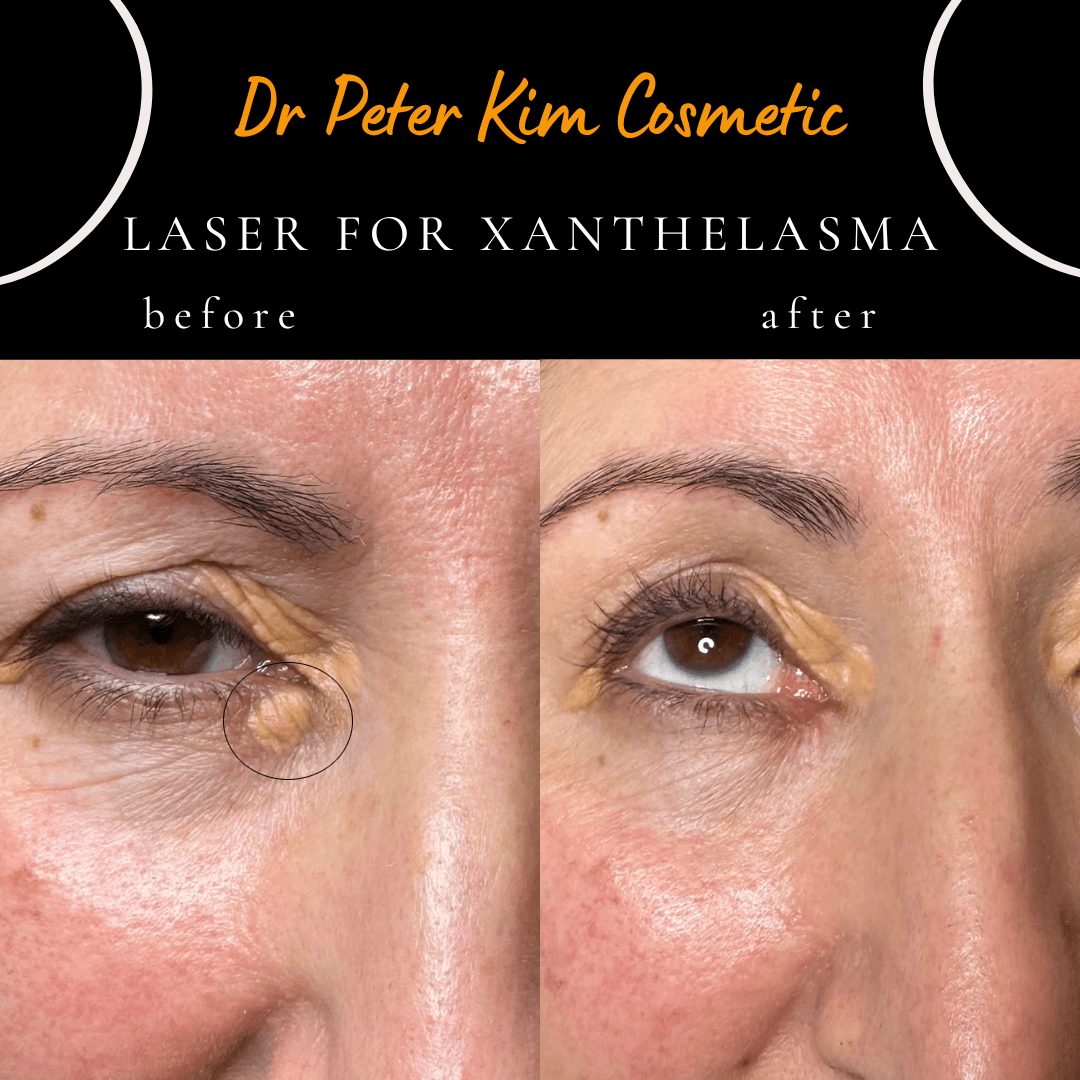
Xanthelasma of the upper eyelids treated with laser. Clinic locations: Chatswood & Cabramatta, NSW Opening hours: Wednesday – Saturday | 9:00 AM – 5:00 PM Phone: (02) 9411 4880 • 0433 284 880
Xanthelasma of the upper eyelids treated with laser. Clinic locations: Chatswood & Cabramatta, NSW Opening hours: Wednesday – Saturday | 9:00 AM – 5:00 PM Phone: (02) 9411 4880 • 0433 284 880🕒 Wed–Sat | 9:00 AM – 5:00 PM
Xanthelasma of the lower eyelids treated with laser. Clinic locations: Chatswood & Cabramatta, NSW Opening hours: Wednesday – Saturday | 9:00 AM – 5:00 PM Phone: (02) 9411 4880 • 0433 284 880 🕒 Wed–Sat | 9:00 AM – 5:00 PM
Xanthelasma of the upper eyelids treated with laser. Clinic locations: Chatswood & Cabramatta, NSW Opening hours: Wednesday – Saturday | 9:00 AM – 5:00 PM Phone: (02) 9411 4880 • 0433 284 880
Mulitple xanthelasma of the upper eyelids treated with laser. Clinic locations: Chatswood & Cabramatta, NSW Opening hours: Wednesday – Saturday | 9:00 AM – 5:00 PM Phone: (02) 9411 4880 • 0433 284 880
Xanthelasma of the upper eyelids treated with laser. Clinic locations: Chatswood & Cabramatta, NSW Opening hours: Wednesday – Saturday | 9:00 AM – 5:00 PM Phone: (02) 9411 4880 • 0433 284 880
Xanthelasma of the lower eyelids treated with laser. Clinic locations: Chatswood & Cabramatta, NSW Opening hours: Wednesday – Saturday | 9:00 AM – 5:00 PM Phone: (02) 9411 4880 • 0433 284 880
Xanthelasma of the upper eyelids treated with laser. Clinic locations: Chatswood & Cabramatta, NSW Opening hours: Wednesday – Saturday | 9:00 AM – 5:00 PM Phone: (02) 9411 4880 • 0433 284 880
Xanthelasma of the lower eyelids treated with laser. Clinic locations: Chatswood & Cabramatta, NSW Opening hours: Wednesday – Saturday | 9:00 AM – 5:00 PM Phone: (02) 9411 4880 • 0433 284 880
Xanthelasma of the upper eyelids treated with laser. Clinic locations: Chatswood & Cabramatta, NSW Opening hours: Wednesday – Saturday | 9:00 AM – 5:00 PM Phone: (02) 9411 4880 • 0433 284 880
Xanthelasma of the lower eyelids treated with laser. Clinic locations: Chatswood & Cabramatta, NSW Opening hours: Wednesday – Saturday | 9:00 AM – 5:00 PM Phone: (02) 9411 4880 • 0433 284 880
Xanthelasma of the upper eyelids treated with laser. Clinic locations: Chatswood & Cabramatta, NSW Opening hours: Wednesday – Saturday | 9:00 AM – 5:00 PM Phone: (02) 9411 4880 • 0433 284 880
Xanthelasma of the lower eyelids treated with laser. Clinic locations: Chatswood & Cabramatta, NSW Opening hours: Wednesday – Saturday | 9:00 AM – 5:00 PM Phone: (02) 9411 4880 • 0433 284 880
Xanthelasma of the upper and lower eyelids treated with laser. Clinic locations: Chatswood & Cabramatta, NSW Opening hours: Wednesday – Saturday | 9:00 AM – 5:00 PM Phone: (02) 9411 4880 • 0433 284 880
Xanthelasma of the lower eyelids treated with laser. Clinic locations: Chatswood & Cabramatta, NSW Opening hours: Wednesday – Saturday | 9:00 AM – 5:00 PM Phone: (02) 9411 4880 • 0433 284 880
Xanthelasma of the upper eyelids treated with laser. Clinic locations: Chatswood & Cabramatta, NSW Opening hours: Wednesday – Saturday | 9:00 AM – 5:00 PM Phone: (02) 9411 4880 • 0433 284 880
Xanthelasma of the upper and lower eyelids treated with laser. Clinic locations: Chatswood & Cabramatta, NSW Opening hours: Wednesday – Saturday | 9:00 AM – 5:00 PM Phone: (02) 9411 4880 • 0433 284 880
Xanthelasma of the upper eyelids treated with laser. Clinic locations: Chatswood & Cabramatta, NSW Opening hours: Wednesday – Saturday | 9:00 AM – 5:00 PM Phone: (02) 9411 4880 • 0433 284 880
Xanthelasma of the upper and lower eyelids treated with laser. Clinic locations: Chatswood & Cabramatta, NSW Opening hours: Wednesday – Saturday | 9:00 AM – 5:00 PM Phone: (02) 9411 4880 • 0433 284 880
Xanthelasma of the lower eyelids treated with laser. Clinic locations: Chatswood & Cabramatta, NSW Opening hours: Wednesday – Saturday | 9:00 AM – 5:00 PM Phone: (02) 9411 4880 • 0433 284 880
Xanthelasma of the upper and lower eyelids treated with laser. Clinic locations: Chatswood & Cabramatta, NSW Opening hours: Wednesday – Saturday | 9:00 AM – 5:00 PM Phone: (02) 9411 4880 • 0433 284 880
Xanthelasma of the upper eyelids treated with laser. Clinic locations: Chatswood & Cabramatta, NSW Opening hours: Wednesday – Saturday | 9:00 AM – 5:00 PM Phone: (02) 9411 4880 • 0433 284 880
Xanthelasma of the upper eyelids treated with laser. Clinic locations: Chatswood & Cabramatta, NSW Opening hours: Wednesday – Saturday | 9:00 AM – 5:00 PM Phone: (02) 9411 4880 • 0433 284 880
Xanthelasma of the upper eyelids treated with laser. Clinic locations: Chatswood & Cabramatta, NSW Opening hours: Wednesday – Saturday | 9:00 AM – 5:00 PM Phone: (02) 9411 4880 • 0433 284 880
FAQ about Xanthelasma
1. What is xanthelasma?
Xanthelasma (also known as xanthelasma palpebrarum, or XP) is a benign skin condition where yellowish, cholesterol-rich plaques form on the eyelids, most commonly near the inner corner of the eye (the inner canthus). The plaques are soft, semi-solid, and often appear symmetrically on both the upper and lower eyelids; they may be flat, slightly raised, or occasionally nodular, and the condition is progressive, meaning the plaques tend to enlarge and coalesce over time. The term “xanthelasma” derives from the Greek words xanthos (yellow) and elasma (beaten metal plate), reflecting the typical appearance of the lesions.
2. What causes xanthelasma?
Xanthelasma develops when cholesterol and other lipids accumulate within specialized immune cells (macrophages) in the dermis, converting them into lipid-laden “foam cells” which create the characteristic yellow deposits. Approximately half of all patients with xanthelasma have elevated cholesterol levels or other lipid abnormalities. However, many individuals develop xanthelasma despite having completely normal blood lipid profiles—so-called normolipidemic xanthelasma. Other predisposing factors may include diabetes, hypothyroidism, liver disease (e.g., primary biliary cirrhosis), and a family history of high cholesterol or xanthelasma.
3. Does xanthelasma mean I have high cholesterol or heart disease?
This is a common concern, and the answer requires some nuance. On average, about 50% of patients with xanthelasma are hyperlipidemic, meaning they have high cholesterol or other lipid abnormalities. Accordingly, current medical guidelines recommend that all patients with xanthelasma have their lipid profile checked by a physician.
However, recent high-quality evidence has challenged the notion that xanthelasma is a reliable marker for heart disease. A large 2025 case–control study of over 35,000 individuals found no significant difference in the prevalence of dyslipidemia (abnormal lipids) or cardiovascular disease between patients with xanthelasma and matched controls without the condition. Patients with xanthelasma had similar total cholesterol, LDL cholesterol, HDL cholesterol, and triglyceride levels compared to controls, and the rates of statin use, hypertension, diabetes, and cardiovascular events were also comparable. Other studies have similarly concluded that patients with typical-appearing xanthelasma do not necessarily require lipid screening solely for the purpose of cardiovascular risk assessment. Some earlier studies, in contrast, have suggested that xanthelasma may independently predict heart attack risk, so this remains an area of ongoing research. The safest course is to have your lipid levels evaluated by your physician, regardless of the evolving evidence.
4. Does xanthelasma go away on its own?
No. Once xanthelasma plaques are established, they will either remain the same size or slowly enlarge over time; spontaneous regression does not occur. Treatment is not medically necessary since xanthelasma is benign and non-cancerous, but many patients seek removal for cosmetic reasons.
5. What are the treatment options for xanthelasma?
A variety of treatment options are available, ranging from minimally invasive procedures to surgical excision. The choice of treatment depends on the size, thickness, number, and location of the lesions.
Laser Therapy: This is one of the most popular and effective options. Carbon dioxide (CO₂) and Erbium:YAG (Er:YAG) lasers are the most studied and widely used modalities. CO₂ laser therapy has been shown to achieve clearance rates exceeding 75% in over 90% of patients, with recent studies reporting clearance rates above 95% and even exceeding 99% for smaller lesions. We use CO2 laser to treat xanthelasma.
Surgical Excision: Direct surgical removal is highly effective, especially for larger or deeper lesions. It can be performed under local anesthetic. However, surgical excision carries a recurrence rate of up to 40% following primary excision and carries a risk of scarring and eyelid malposition. For extensive lesions, excision may be combined with blepharoplasty or skin grafting.
Chemical Cauterization: Trichloroacetic acid (TCA), typically at concentrations of 30%–50%, can be applied cautiously to the plaques to cause controlled chemical destruction. This method is less expensive than laser but requires precise application to avoid damaging the delicate eyelid skin.
Other Modalities: Electrodessication followed by curettage, cryotherapy (liquid nitrogen freezing), and radiofrequency ablation are alternative options, though they are generally less refined than laser or surgical techniques for this specific location.
6. Is laser treatment for xanthelasma safe and effective?
Yes, laser treatment is both safe and highly effective. A 2025 comparative study involving 230 patients found that both ultra-pulsed CO₂ laser and ultra-picosecond laser achieved clearance rates exceeding 95% . Similarly, a 2025 study of 214 patients treated with Er:YAG laser reported complete lesion removal in all treated lesions, with only 1.5% hypertrophic scarring and a recurrence rate of 10.5%.
For large xanthelasma lesions (grade IV), a 2025 study of 295 patients using CO₂ laser excision reported clearance rates around 95% and an overall recurrence rate of 6.8% over a 12-month follow-up period. Complications observed included scarring (4.4%), hyperpigmentation (8.1%), and hypopigmentation (8.5%), with no severe complications reported.
7. What are the risks and side effects of laser treatment?
As with any procedure involving the delicate periorbital skin, laser treatment carries potential risks. The most common complications include:
Hyperpigmentation (darkening of the treated skin) – temporary and usually resolves over weeks to months
Hypopigmentation (lightening of the treated skin) – more often permanent
Scarring (hypertrophic or atrophic)
Erythema (redness and inflammation) – seen in up to 40% of CO₂ laser patients
Eyelid malposition (ectropion or retraction) – uncommon when performed by an experienced practitioner
In comparative studies, ultra-picosecond lasers demonstrated superior safety compared to CO₂ lasers, with lower rates of hypertrophic scarring (1.82% vs. 8.33%), hyperpigmentation (2.73% vs. 11.67%), and hypopigmentation (3.64% vs. 10.83%). However, ultra-picosecond lasers required on average more treatment sessions (4.74 vs. 3.26).
8. Will xanthelasma come back after treatment?
Recurrence is common, regardless of the treatment modality used. Patients should be fully informed that xanthelasma can and often does return after removal.
Surgical excision: recurrence rates of 40% have been reported, with 26% of recurrences occurring within the first year
CO₂ laser: recurrence rates of 15% (ultra-pulsed) vs. 6.36% (ultra-picosecond) in a 2025 study; laser excision of large lesions has shown 6.8% recurrence at 12 months
Risk factors for recurrence include multiple lesions (higher recurrence rate than single lesions), lesions taller than 2 mm in height, the presence of hyperlipidemia, and involvement of all four eyelids. Even when underlying lipid disorders are treated with cholesterol-lowering medications, there is no reliable evidence that this prevents recurrence of xanthelasma; laser or surgical removal addresses the visible deposits, but the underlying tendency to accumulate lipids may persist.
9. When should I see a doctor?
If you notice yellow patches on or around your eyelids, you should arrange a medical evaluation for two important reasons:
To confirm the diagnosis – other conditions can mimic xanthelasma, including syringomas, sebaceous hyperplasia, epidermal inclusion cysts, and rarely, skin cancers. Diagnosis is usually made clinically based on the characteristic appearance, but a biopsy may be required in atypical cases.
To assess for underlying systemic conditions – as discussed, approximately half of xanthelasma patients have lipid abnormalities that may warrant management, whether or not they are directly linked to cardiovascular risk. Checking a fasting lipid panel is a straightforward step that can identify patients who would benefit from lifestyle modification or medical therapy.
If you are not bothered by the cosmetic appearance, no treatment is required as the lesions are benign and non-cancerous.
10. Can I remove xanthelasma at home?
No. There is no reliable or safe home remedy for xanthelasma. Over-the-counter topical products, castor oil, garlic, or other natural treatments lack scientific evidence and carry a significant risk of skin irritation, burns, and scarring when applied to the delicate eyelid area. Any treatment of xanthelasma should be performed by a qualified medical professional (dermatologist, oculoplastic surgeon, or ophthalmologist) using appropriate equipment and techniques.
This information is provided for educational purposes and is not a substitute for professional medical advice. Please consult with your physician or a qualified skin specialist to determine the most appropriate treatment for your individual condition.